Egg freezing is now widely marketed, often in language that implies more certainty than exists. It is a genuinely valuable option, and it is worth understanding accurately — because the decision involves real cost, a real procedure, and an outcome that is genuinely uncertain.
What it involves
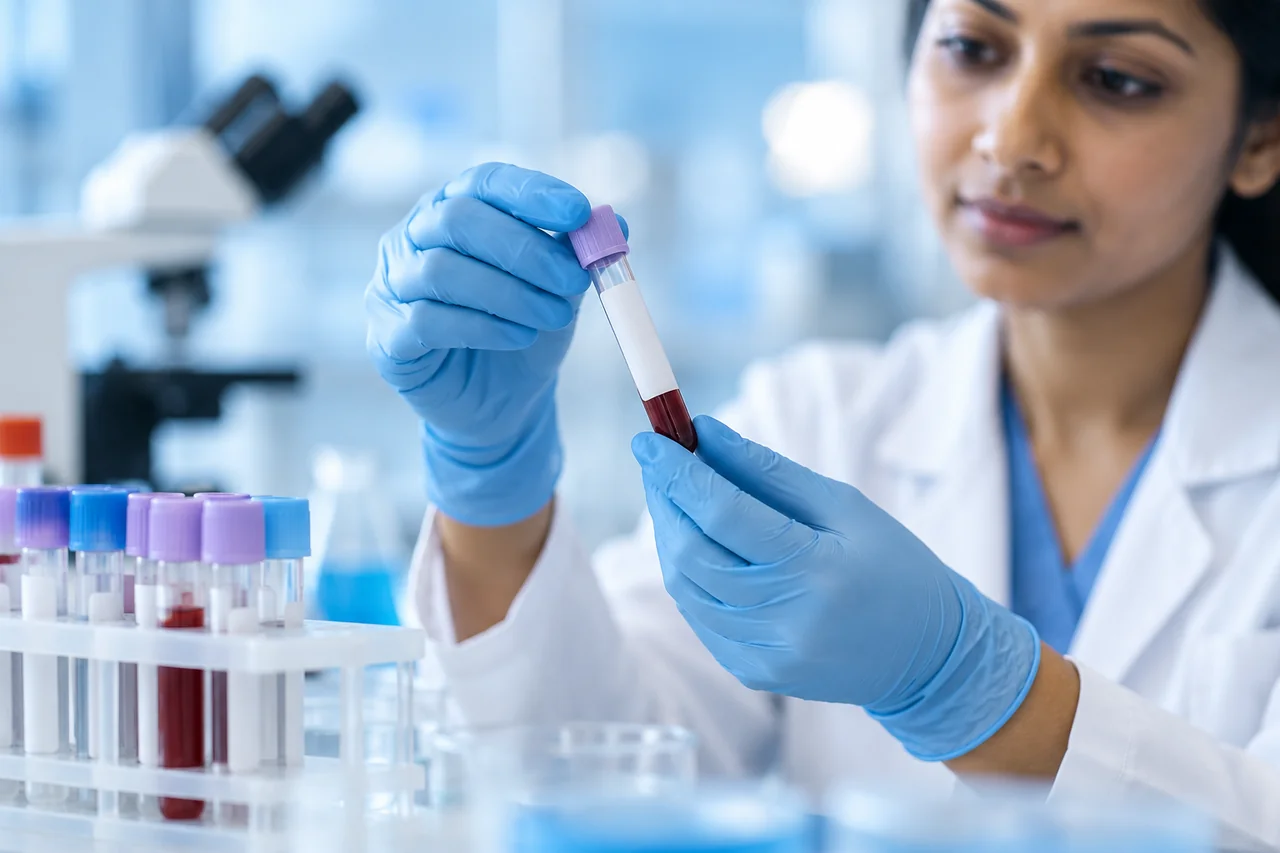
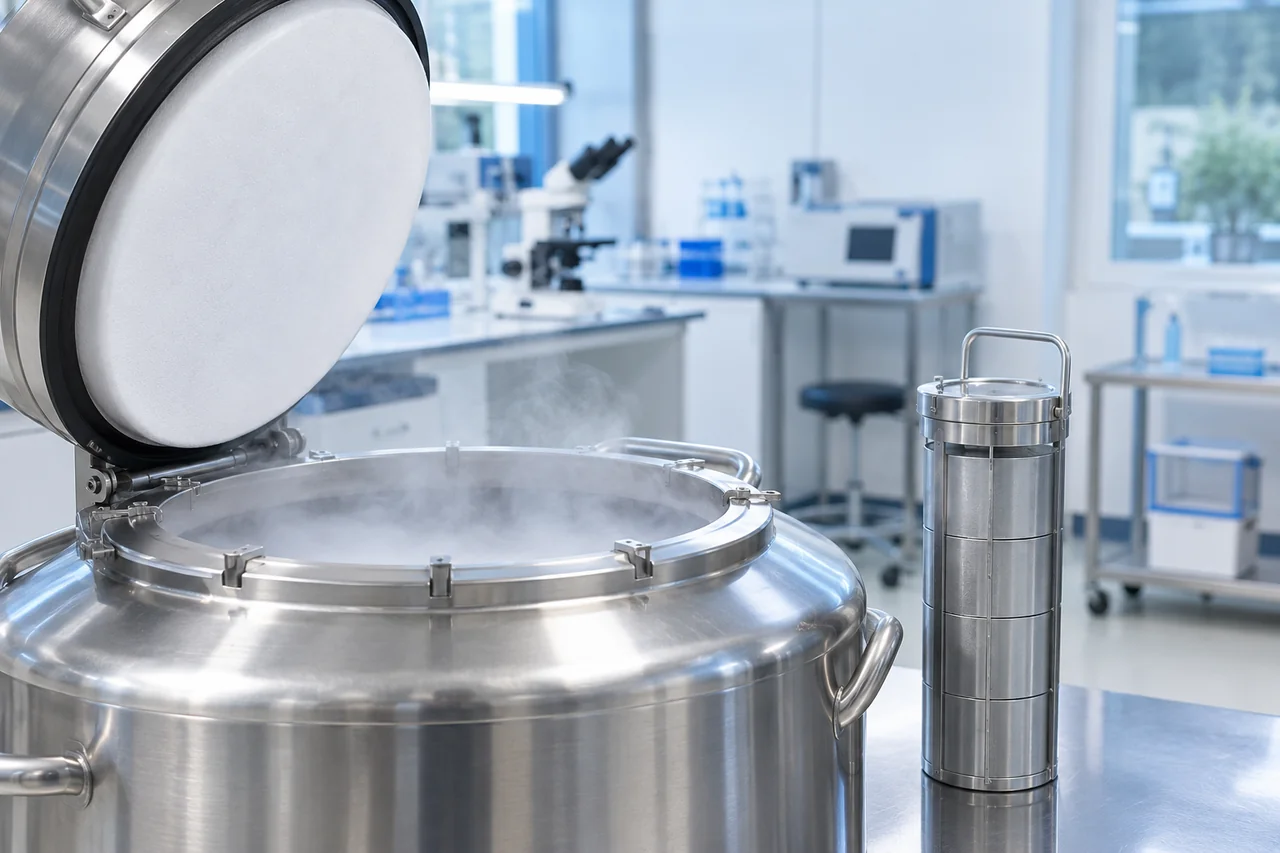
The process is the first half of an IVF cycle: around ten to fourteen days of stimulation injections, monitoring scans, then egg collection under sedation. The eggs are frozen the same day by vitrification, an ultra-rapid method that prevents ice crystals forming. Our page on egg freezing in Hyderabad describes the steps at our centre.
They remain frozen until you decide to use them, at which point they are thawed, fertilised by ICSI, cultured as embryos, and transferred.
The two numbers that matter
Your age when the eggs are frozen. This is the dominant factor, and the reason is worth understanding: freezing stops the clock for those particular eggs. Eggs frozen at 32 remain 32-year-old eggs, whatever your age when you use them. Eggs frozen at 40 remain 40-year-old eggs. Since egg quality is overwhelmingly determined by age, the age at freezing largely determines what the eggs are worth.
How many you store. There is attrition at every subsequent step. Not every frozen egg survives thawing. Not every survivor fertilises. Not every fertilised egg becomes a viable embryo. Not every viable embryo implants.
The practical consequence is that a small number of stored eggs offers limited insurance. This is why more than one collection cycle is sometimes recommended, and why anyone quoting you a success figure without asking your age and your ovarian reserve is not giving you real information.
It preserves an option, not an outcome. Egg freezing cannot guarantee a future pregnancy, and no clinic can honestly tell you otherwise. What it does is keep a possibility available that would otherwise narrow with time. That is worth something real — but it is not insurance, and it should not be sold as such.
Questions worth asking before you commit
- Given my age and my AMH, how many eggs would you expect to collect per cycle?
- How many would you recommend I store, and how many cycles is that likely to take?
- What does each additional cycle cost?
- What are the annual storage charges, and when do they begin?
- What will it cost later to thaw, fertilise and transfer?
- What happens to the eggs if I stop paying storage, or if circumstances change?
- What are your laboratory's thaw survival rates?
A clinic that answers these directly is telling you something useful about how it operates.
Medical fertility preservation
The calculation is different where preservation is being considered before treatment that may affect fertility — chemotherapy, radiotherapy, or certain surgery. Here the alternative is not "try later naturally" but potentially "no eggs at all", which changes the value of the option substantially. See fertility preservation for egg, embryo and sperm freezing.
These situations are time-critical. If this applies to you, raise it with your oncology team immediately and ask for a fertility referral, so that timing can be coordinated. Say so when you call us and the consultation will be prioritised.
The honest summary
Egg freezing is most valuable when done earlier rather than later, when enough eggs are stored to matter, and when the person doing it understands they are buying an option rather than a guarantee. Under those conditions it is a reasonable and sometimes very good decision.
It is least valuable when done late, in small numbers, by someone who has been led to believe it settles the question. The procedure is the same in both cases; what differs is whether the decision was made with accurate information.
Frequently asked questions
How many eggs should I freeze?
There is no number that fits everyone. The number discussed depends mainly on your age when the eggs are frozen and your ovarian reserve. Your specialist will explain realistic expectations for you.
Does age at freezing matter?
Yes. Eggs frozen at a younger age generally carry a better chance per egg than eggs frozen later, because egg quality declines with age. Freezing does not guarantee a future pregnancy.
Where can I learn about egg freezing at your centre?
Our page on egg freezing in Hyderabad explains the steps, and a consultation lets your doctor review your tests before any decision.
General information only; your doctor will advise what applies to you.
Please note. This page is general information, not medical advice. What is appropriate for you depends on your history, your investigations and a specialist assessment. No fertility treatment can guarantee a pregnancy.
Reviewed by the clinical team at Sree Nandaka IVF Centre, Kompally. General information only — not a substitute for a consultation.