Myth
Freezing eggs guarantees a future baby.
Fact
Frozen eggs offer a future option, not a guarantee. Age at freezing affects the chance of success.
Source: HFEAFreezing eggs, embryos or sperm keeps an option open. It is not a guarantee of a future pregnancy, and understanding that distinction properly is part of the decision.
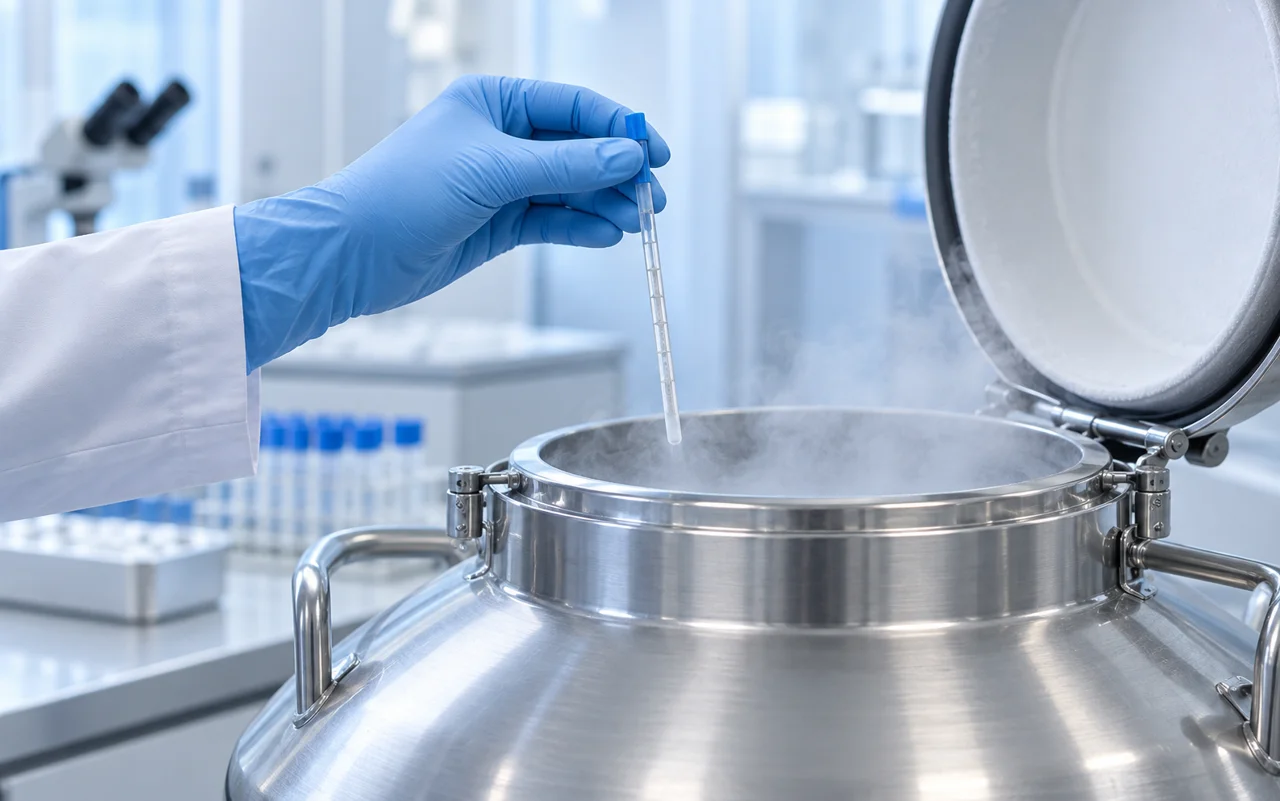
Eggs collected and frozen unfertilised. The usual choice where there is no partner, or where you would rather not create embryos now.
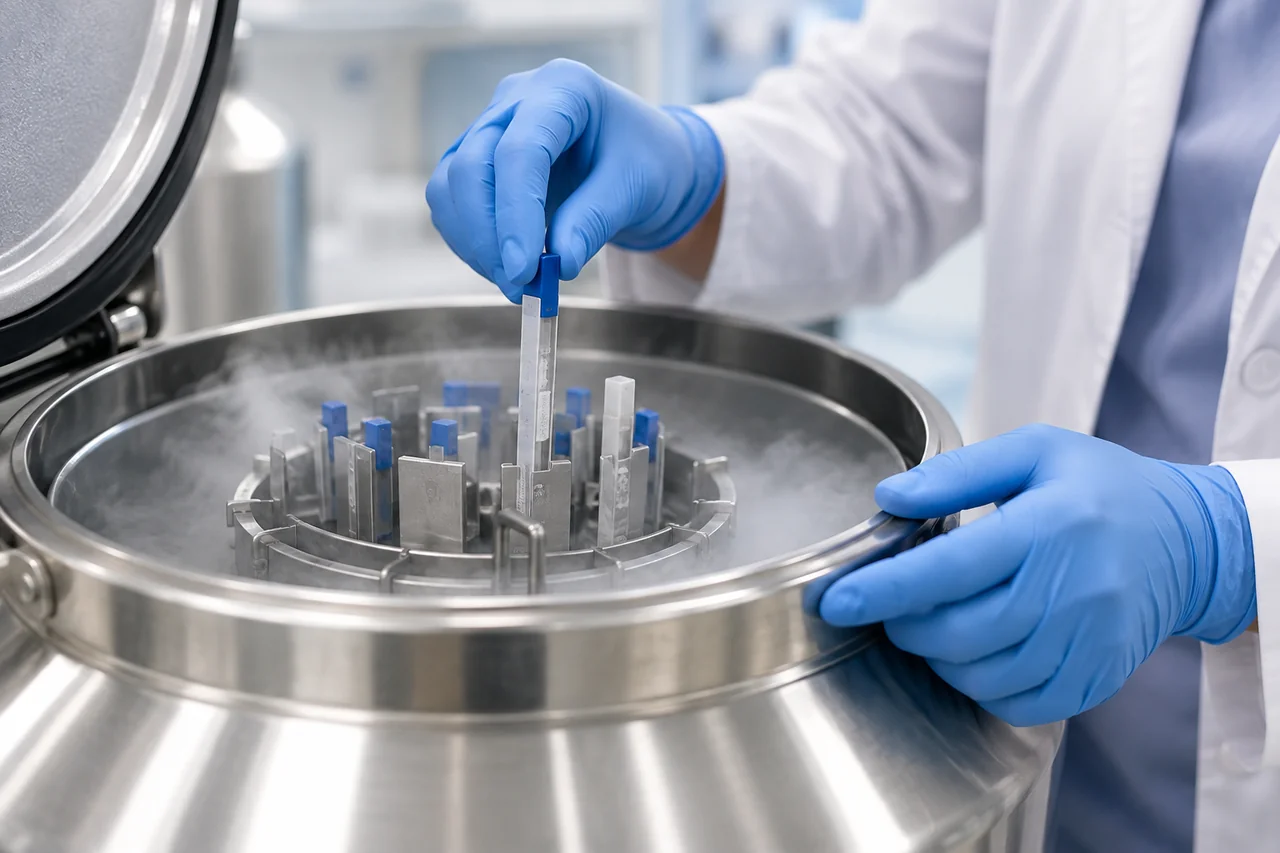
Eggs fertilised first, then frozen as embryos. Typically part of an IVF cycle, where suitable embryos remain after transfer. How frozen embryos are later used is covered in frozen embryo transfer explained.
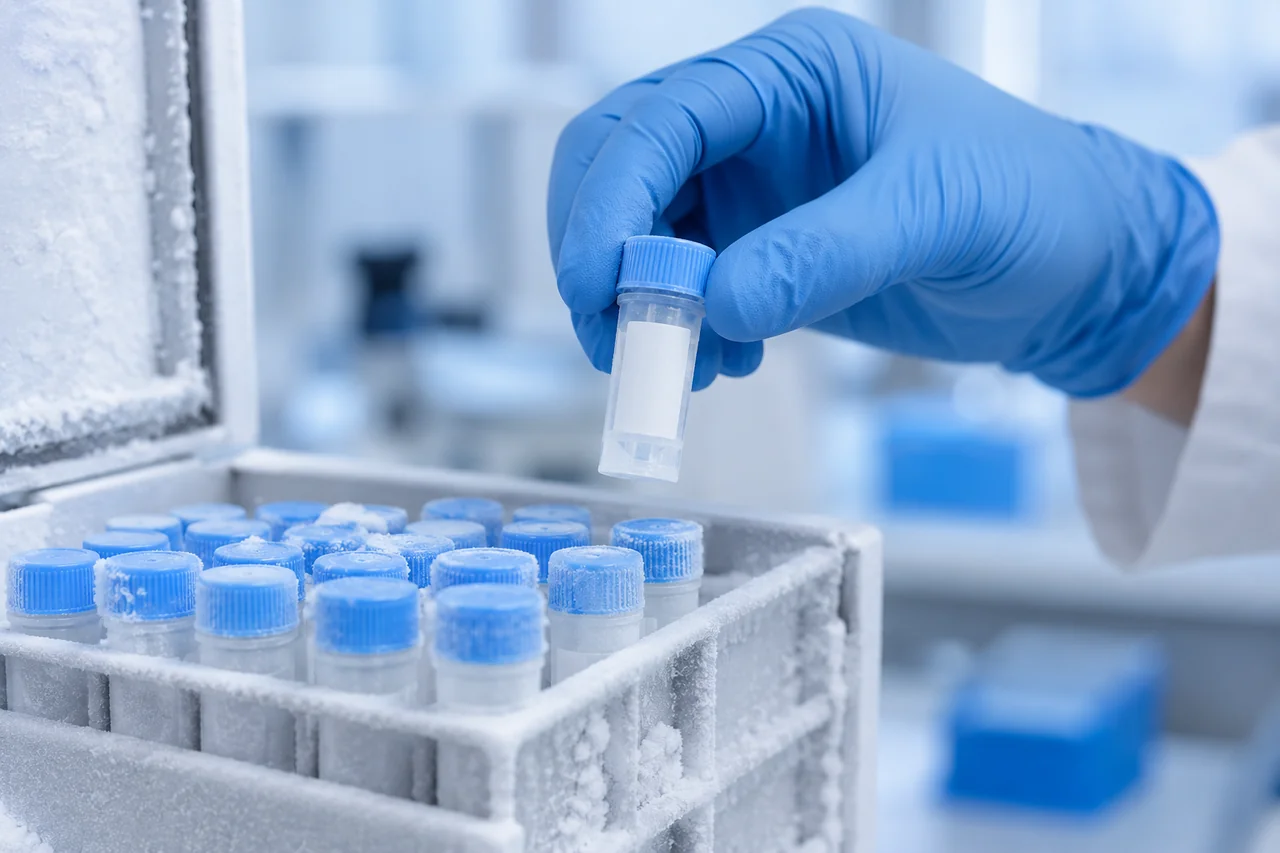
Straightforward, quick, and long established. Often arranged before cancer treatment, surgery, or where a sample may be difficult on the day.
The process is the first half of an IVF cycle. Stimulation injections for around ten to fourteen days, monitoring scans, then egg collection under sedation. The eggs are frozen the same day by vitrification, an ultra-rapid method that avoids ice-crystal damage.
They stay frozen until you decide to use them, at which point they are thawed, fertilised by ICSI, and cultured as embryos.
The benefit depends heavily on two things: your age when the eggs are frozen, and how many are stored. Eggs frozen in the early thirties carry a materially better prospect than eggs frozen at forty, because it is the age of the egg that matters, not the age at which it is used.
There is attrition at each subsequent stage. Not every frozen egg survives thawing, not every survivor fertilises, and not every fertilised egg becomes a viable embryo. This is why the number stored matters, and why more than one collection cycle is sometimes suggested.
It preserves an option, not an outcome. Freezing cannot guarantee a future pregnancy. Anyone who tells you otherwise is misleading you. What it does do is keep a possibility available that would otherwise narrow with time.
Storage requires written consent covering the duration of storage and what should happen to the material in defined circumstances. For embryos, consent is required from both partners, and either may withdraw it. These are not formalities — they are worth reading carefully and discussing before you sign. Storage in India is governed by the ART (Regulation) Act, 2021.
Please note. This page is general information, not medical advice. What is appropriate for you depends on your history, your investigations and a specialist assessment. No fertility treatment can guarantee a pregnancy.
Fertility can come with a lot of advice. Here is what the evidence helps us understand.
Frozen eggs offer a future option, not a guarantee. Age at freezing affects the chance of success.
Source: HFEAEggs are frozen before fertilisation. Embryos have already been created by fertilising an egg with sperm.
Source: HFEAGeneral information. Your clinician can explain what applies to you.
If this is being considered before cancer treatment, tell us when you call — these consultations are prioritised.
Fertility care is a personal series of decisions. It begins with your history, your questions and the findings that matter to your treatment.
Plot 770, Jayabheri Park,
behind Big Bazaar, Kompally,
Hyderabad, Telangana 500014
Mon–Sat: 8:00 am – 4:00 pm
Sunday: 8:00 am – 2:00 pm
Call or WhatsApp +91 76720 01080 · Plot 770, Jayabheri Park, Kompally, Hyderabad 500014 · Mon–Sat 8 am–4 pm, Sun 8 am–2 pm
Book a Consultation Call the centre WhatsApp