Medical Review: Dr. Deepa Rekha Koduru | Reviewed: 5 October 2026
Educational Disclaimer: This article is intended for general educational purposes only and should not replace an individual consultation with a qualified fertility specialist.
Many couples hear the word ICSI for the first time when IVF is being planned, and the natural question is: do we need it? This guide focuses on that decision — when ICSI is recommended, when conventional IVF fertilisation may be enough, and what ICSI can and cannot do. If you want a basic definition first, see our earlier article What is ICSI and when is it recommended? and the IVF and ICSI overview.
ICSI vs conventional IVF fertilisation — one lab step, same IVF journey
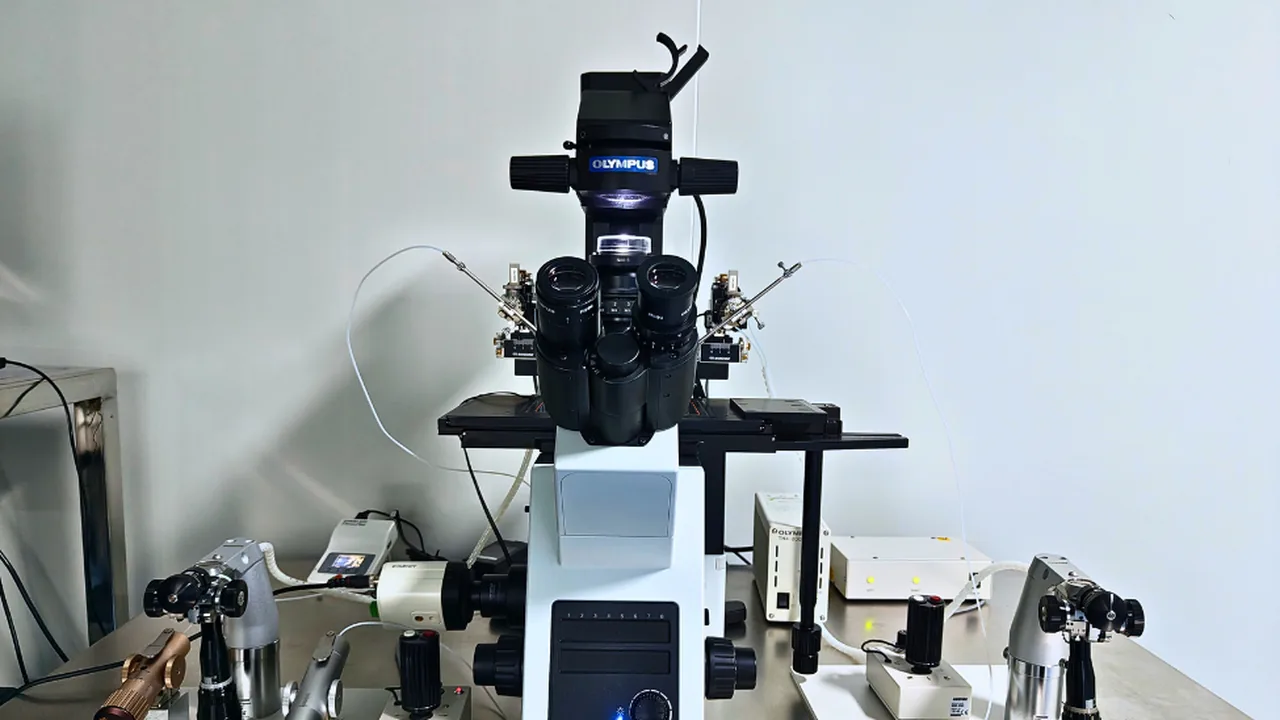
In conventional IVF, eggs and prepared sperm are placed together in a dish and fertilisation is left to happen on its own. In ICSI (intracytoplasmic sperm injection), an embryologist selects a single sperm and injects it directly into each mature egg.
Everything else in the cycle is the same: ovarian stimulation and monitoring, egg collection, embryo culture in the laboratory, and embryo transfer or freezing. ICSI is not a separate treatment — it is a choice about how fertilisation is done on the day of egg collection. Read more about how this works at our centre on the ICSI treatment in Kompally page.
Situations where ICSI is commonly discussed
As explained on our treatment pages, ICSI is offered when sperm count, motility or morphology is limited, after previous fertilisation failure, or in selected other situations your clinician discusses with you. In educational terms, common reasons include:
- Male factor — when a semen analysis shows low count, reduced movement or abnormal shape to a degree that makes natural fertilisation in the dish less likely
- Previous low or failed fertilisation — when an earlier conventional IVF cycle produced few or no fertilised eggs
- Surgically retrieved or limited sperm samples — when only a small number of sperm are available
- Frozen eggs or other laboratory reasons — selected situations where the embryology team advises that direct injection is more appropriate
These are discussion points, not a fixed protocol. The final recommendation depends on both partners' test results, history, and the laboratory's assessment on the day.
What ICSI does not guarantee
It is important to set realistic expectations:
- ICSI helps with certain fertilisation problems. It is not a proven upgrade for every IVF cycle, and it is not automatically “better” for couples without a specific reason.
- Not every injected egg will fertilise, and not every fertilised egg develops into an embryo suitable for transfer.
- ICSI does not change egg quality, the uterine lining, or the many other factors that influence whether pregnancy happens.
- No article — and no responsible clinic — can predict your individual outcome before evaluation.
Your specialist will explain the reasoning for choosing ICSI or conventional IVF in your case, along with its limits.
How male fertility evaluation feeds the ICSI conversation
The decision usually starts with the male partner's assessment. A semen analysis looks at sperm count, movement (motility) and shape (morphology), and sometimes the test is repeated because results can vary. Depending on the findings, the doctor may suggest further evaluation, lifestyle changes, or treatment of an underlying cause before or alongside IVF.
Helpful reading: what a semen analysis tells you and our male fertility treatment page. Both partners' results together guide whether ICSI is discussed.
Questions to bring to your fertility consult in Kompally
- Based on our tests, do you recommend conventional IVF, ICSI, or a mix — and why?
- Which semen analysis results matter most in our case, and should the test be repeated?
- Is there anything the male partner should do before the cycle?
- What happens if fewer eggs than expected fertilise?
- How will the embryology team update us after egg collection?
- Are there costs or consent forms specific to ICSI that we should know about?
Bring previous reports, semen analysis results, a medicine list, and notes on any earlier IVF cycles. Both partners are welcome at the consultation.
Care at Sree Nandaka IVF is led by Dr Deepa Rekha Koduru. See all IVF and fertility services, or contact the centre:
- Address: Plot 770, Jayabheri Park, Kompally, Hyderabad
- Phone: +91 76720 01080
- WhatsApp: +91 76720 01080
- Email: sreenandakafertility@gmail.com
- Hours currently listed: Monday–Saturday 8:00 AM–4:00 PM; Sunday 8:00 AM–2:00 PM (confirm when you book)
The fertility centre (Plot 770) shares a campus area with Sree Nandaka Advanced Surgery (Plot 771). Please use the IVF numbers above for fertility bookings.
Frequently Asked Questions
Is ICSI a different treatment from IVF?
No. ICSI is a fertilisation method used within an IVF cycle. Stimulation, egg collection, embryo culture and embryo transfer follow the same overall pathway; only the way sperm and egg are brought together in the laboratory differs.
Does ICSI give better results than conventional IVF for everyone?
No. ICSI helps with certain fertilisation problems, such as significant male factor or previous low fertilisation. It is not a proven upgrade for every IVF cycle, and your specialist will explain whether it is suitable for you.
Does ICSI guarantee fertilisation or pregnancy?
No. Not every injected egg fertilises, not every embryo develops, and pregnancy depends on many factors including egg quality, embryo development and the uterus.
Do both partners need tests before deciding on ICSI?
Usually yes. A semen analysis and the female partner's evaluation both inform whether conventional IVF or ICSI is discussed.
How do we book an ICSI discussion at Sree Nandaka IVF in Kompally?
Call 7672001080 or WhatsApp 7672001080, email sreenandakafertility@gmail.com, or use the contact page. Confirm clinic hours when you book.
Conclusion
When is ICSI recommended? Most often when there is a male factor, a history of low fertilisation, or a specific laboratory reason. It is one step within IVF — not a separate treatment and not a guarantee. The right choice comes from both partners' evaluation and a clear conversation with your specialist.
If you are planning IVF and want to understand whether ICSI is relevant for you, the team at Sree Nandaka IVF can review your reports with Dr. Deepa Rekha Koduru and explain the options in plain language.
Medical Disclaimer: This article is for educational purposes only and should not replace medical advice from a qualified fertility specialist. Recommendations vary according to age, medical history, examination findings and investigation results. No success rates or outcome guarantees are stated or implied.